
Cross-Chain BridgesTested01 APR 26

Arbitrum Bridge Review
Official Arbitrum L2 + Orbit chains bridge
Affiliate link · doesn't affect score · independent methodology
0.0/ 5Skrumble Score
At a glance
First-party bridge for moving assets to Arbitrum One/Nova plus 35+ Orbit and Base ecosystem chains.
At A Glance
Who Is Arbitrum Bridge Best For?
Best for: DeFi users needing to move ERC-20 tokens between Ethereum and Arbitrum networks who prioritize security and broad token support over speed. Skip if: You need fast withdrawals (7-8 day withdrawal period for main networks) or prefer single-interface access to established, fully decentralized networks only.Our Take
Our practical experience with the Arbitrum Bridge demonstrates that this cross-chain bridge solution offers significant benefits to Ethereum users, including reduced gas fees, high transaction throughput of up to 40,000 TPS, strong Ethereum Virtual Machine compatibility, and seamless interoperability with Ethereum mainnet. However, there are notable constraints including extended withdrawal periods of 7-8 days for main networks, varying security levels across supported chains, and risk warnings for independent Orbit chains.Skrumble Scoring Breakdown
Strong security backed by 30+ professional audits for core networks, but significantly slow withdrawal periods and varying security levels across 35+ Orbit chains reduce overall user experience. See our full crypto bridge scoring methodology here.What is Arbitrum Bridge and How Does it Work?
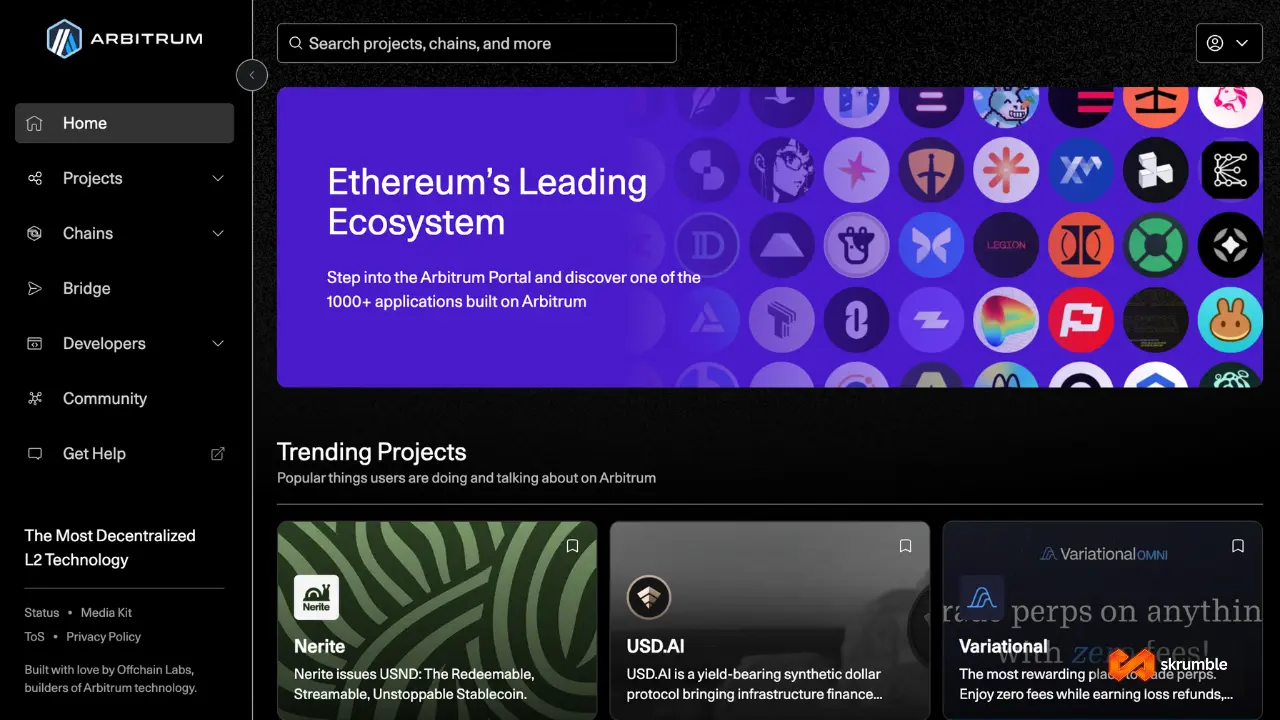 Arbitrum Bridge is a Layer 2 scaling solution that connects Ethereum's mainnet (Layer-1) with Arbitrum's rollup networks (Layer-2), allowing users to transfer ETH and all ERC-20 tokens between these networks. Arbitrum's technology is designed to enhance the performance of smart contracts and decentralized applications while maintaining Ethereum's security guarantees.
To use the Arbitrum Bridge, users can connect their digital wallet like MetaMask and bridge tokens from Ethereum to either Arbitrum One or Arbitrum Nova networks.
The Arbitrum ecosystem operates on two distinct mainnets that serve different purposes:
Arbitrum One utilizes multi-round interactive optimistic rollups to ensure transaction validity. The system optimistically assumes posted transaction data is accurate by default, but includes a 7-day challenge period where users can dispute invalid transactions. When challenges occur, validators resolve disputes on Ethereum's Layer 1, ensuring cost-effective dispute resolution.
Arbitrum Nova employs the AnyTrust model with a Data Availability Committee (DAC) to provide ultra-low transaction fees. The Sequencer compresses transaction data and submits it to the DAC for certification. If the DAC cannot certify a batch, the system falls back to posting data directly to Ethereum, maintaining security while optimizing for cost.
Arbitrum Bridge is a Layer 2 scaling solution that connects Ethereum's mainnet (Layer-1) with Arbitrum's rollup networks (Layer-2), allowing users to transfer ETH and all ERC-20 tokens between these networks. Arbitrum's technology is designed to enhance the performance of smart contracts and decentralized applications while maintaining Ethereum's security guarantees.
To use the Arbitrum Bridge, users can connect their digital wallet like MetaMask and bridge tokens from Ethereum to either Arbitrum One or Arbitrum Nova networks.
The Arbitrum ecosystem operates on two distinct mainnets that serve different purposes:
Arbitrum One utilizes multi-round interactive optimistic rollups to ensure transaction validity. The system optimistically assumes posted transaction data is accurate by default, but includes a 7-day challenge period where users can dispute invalid transactions. When challenges occur, validators resolve disputes on Ethereum's Layer 1, ensuring cost-effective dispute resolution.
Arbitrum Nova employs the AnyTrust model with a Data Availability Committee (DAC) to provide ultra-low transaction fees. The Sequencer compresses transaction data and submits it to the DAC for certification. If the DAC cannot certify a batch, the system falls back to posting data directly to Ethereum, maintaining security while optimizing for cost.
Unique Features
Dual-Network Architecture
Unlike most Layer 2 solutions, Arbitrum provides two distinct networks optimized for different use cases. Arbitrum One focuses on maximum security through optimistic rollups, while Arbitrum Nova prioritizes cost efficiency through the AnyTrust model.Arbitrum Governance
The protocol operates under a decentralized governance structure with two key bodies: The Arbitrum DAO consists of ARB token holders and their elected delegates who govern protocol development and treasury allocation. The DAO operates under the Constitution of the Arbitrum DAO and can democratically make decisions affecting the entire ecosystem. The Security Council comprises 12 elected members responsible for emergency responses and security oversight. While powerful, the Council's existence and authority are determined by the DAO, ensuring democratic control over centralized functions.Cryptocurrencies Available on Arbitrum Bridge
The Arbitrum Bridge provides universal ERC-20 token support, enabling permissionless bridging of any Ethereum-based token through the Standard ERC-20 Gateway. Popular supported cryptocurrencies include Wrapped Ether (WETH), Tether USD (USDT), USD Coin (USDC), Chainlink (LINK), Dai Stablecoin (DAI), Shiba Inu (SHIB), Polygon (MATIC), Wrapped Bitcoin (WBTC), and hundreds of other ERC-20 tokens.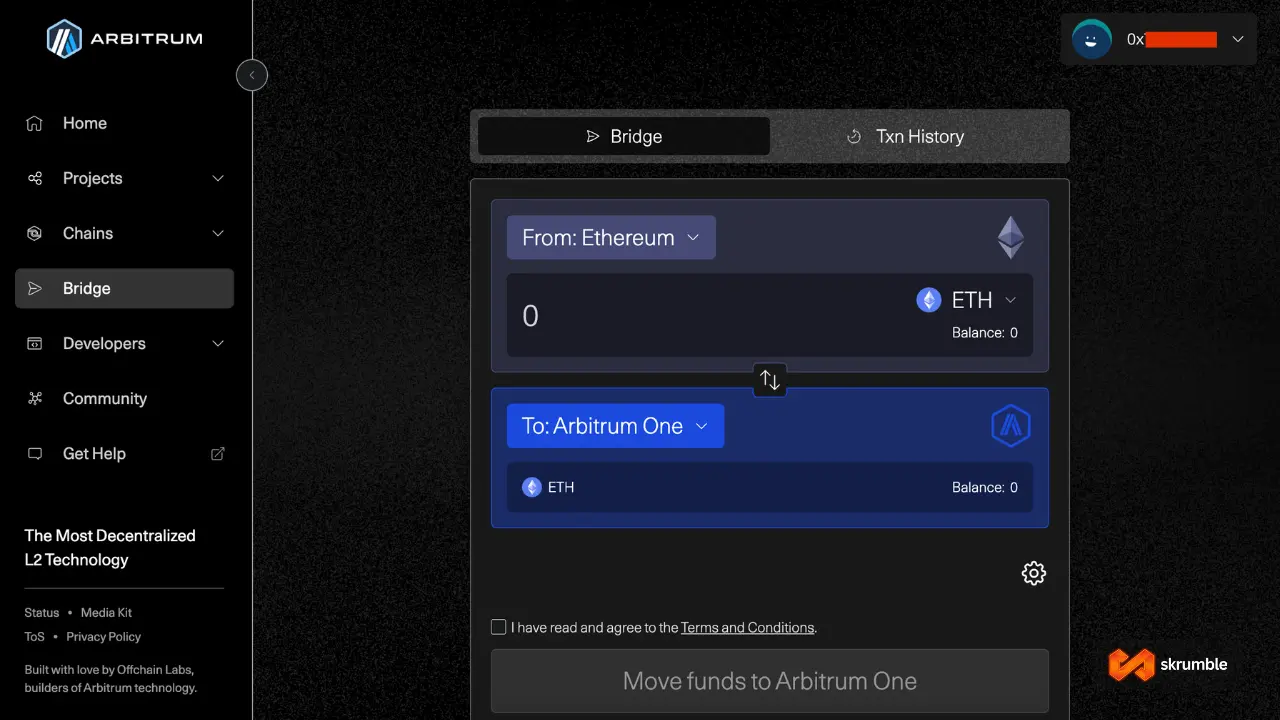
Networks Available on Arbitrum Bridge
The Arbitrum Bridge offers a tiered network support structure with different security guarantees:Core Arbitrum Networks (Highest Security)
- Ethereum Mainnet (Layer 1) - Full Ethereum security
- Arbitrum One (Optimistic rollup with security focus)
- Arbitrum Nova (AnyTrust model with cost optimization)
Orbit Chains (35+ Networks - Proceed with Caution)
The bridge provides access to 35+ independent Orbit chains that utilize Arbitrum technology but operate with varying degrees of decentralization. These include various Layer 3 solutions and independent networks built on Arbitrum's tech stack.Important Warning:
Arbitrum explicitly states "Bridge at your own risk" for Orbit chains, as these networks have different security assumptions and governance models than the core Arbitrum networks.Additional Non-Arbitrum Chains
The bridge also supports select non-Arbitrum networks including:- Base - Coinbase's Optimistic Rollup built with OP Stack technology
Security Considerations by Network Type
While the expanded network support provides flexibility, users should understand that only the core Arbitrum networks (Ethereum, Arbitrum One, Nova) benefit from the full security guarantees and extensive audit coverage discussed in this review. Orbit chains and other supported networks operate under different security assumptions and should be approached with appropriate caution.Fees
The Arbitrum Bridge charges an average of \$0.25 per transaction, though fees are dynamic and vary based on network congestion. While not the cheapest option available, the bridge delivers up to 95% gas savings compared to Ethereum mainnet transactions. Compared to alternatives like Across Protocol (0.06-0.12%) or Stargate Finance (0.06% flat fee), Arbitrum's fixed-fee structure may be less competitive for larger transfers but offers predictability for users.Is Arbitrum Bridge Safe?
Based on our security analysis, the Arbitrum Bridge demonstrates exceptional security standards backed by Ethereum's robust infrastructure. The bridge has undergone over 30 professional security audits since 2022 by leading firms including Trail of Bits, ConsenSys Diligence, OpenZeppelin, Code4rena, and ChainSecurity. Security Features:- Ethereum-grade security through optimistic rollup architecture
- Permissionless validator network allowing anyone to participate in security
- Stake-based validator incentives ensuring compliance with network rules
- Automatic fraud detection with rapid correction mechanisms
- 7-day challenge period for additional security verification
Staking Rewards/ Liquidity Provider Yields
The Arbitrum ecosystem offers competitive yields for liquidity providers, with average annual returns of approximately 15.69%. These rewards come from various DeFi protocols built on Arbitrum rather than the bridge itself.Arbitrum Native Token (ARB)
\$coin_id = get_field('coingecko_single_crypto'); if (\$coin_id) { echo ' The Arbitrum ecosystem is powered by ARB, an ERC-20 governance token that enables participation in protocol development and decision-making. ARB holders can vote on governance proposals, elect Security Council members, and influence the direction of the Arbitrum ecosystem. Key Token Features:- Governance participation in Arbitrum DAO decisions
- Security Council elections - vote for the 12-member council
- Staking capabilities for network security contribution
- Treasury voting on fund allocation and investments
- 42.78% to Arbitrum DAO treasury - community-controlled funds
- 26.94% to Team and Future Team + Advisors - development incentives
- 17.53% to Investors - funding support
- 11.62% to individual wallets - community airdrops
- 1.13% to DAOs in the Arbitrum ecosystem - ecosystem support
Things We Do Not Like about the Arbitrum Bridge
Despite its strengths, the Arbitrum Bridge has several notable limitations that may deter certain users: Extended Withdrawal Times: The 7-8 day challenge period for withdrawals significantly impacts user experience, especially for active traders who need quick access to funds. Limited Network Support: Unlike competitors such as Portal Bridge or Synapse Protocol, Arbitrum Bridge only supports Ethereum-based networks, missing opportunities for cross-ecosystem transfers. Inconsistent Security Levels: While the core Arbitrum networks offer excellent security, the 35+ Orbit chains and additional networks come with explicit risk warnings and varying degrees of decentralization, creating potential confusion for users. Single Sequencer Dependency: The reliance on a centralized sequencer for transaction ordering creates potential bottlenecks and centralization concerns, though this is common among many Layer 2 solutions.Conclusion
The Arbitrum Bridge stands out as a security-focused solution for Ethereum-based transfers, offering comprehensive ERC-20 support and battle-tested infrastructure backed by extensive audits. The dual-network architecture provides flexibility for users with different priority preferences between security and cost optimization. However, the significant withdrawal delays and mixed security levels across supported networks make it less suitable for users requiring quick access to funds or consistent security guarantees across all chains. For Ethereum-centric users prioritizing security over speed and willing to navigate varying risk levels, Arbitrum Bridge offers extensive network access amongcross-chain bridge solutions.Skrumble Community Ratings
We're building our Arbitrum Bridge review section! Share your experience to help others, particularly regarding:- Your experience with withdrawal times and any delays encountered
- How fees compare to other bridges for similar transfers
- Any security concerns or successful large transfers
- Support quality and response times for bridge-related issues
FAQs
How Long Does it Take to Get Through the Arbitrum Bridge?
+ Deposits to Arbitrum typically complete within 15-30 minutes. However, withdrawals from Arbitrum to Ethereum require a 7-8 day challenge period for security verification, making this one of the slower bridges for exit transactions.What are the Drawbacks of Arbitrum?
+ The main drawbacks include extended withdrawal periods (7-8 days), limited network support (Ethereum ecosystem only), single sequencer dependency, and higher fees compared to percentage-based competitors.What is the Best Bridge from ETH to Arbitrum?
+ For deposits to Arbitrum, the native Arbitrum Bridge offers the most direct and secure option. For faster alternatives, consider Across Protocol or Stargate Finance, though they may have different security trade-offs.Can Arbitrum reach 100 dollars?
+ With ARB currently trading around the \$1 mark, reaching \$100 would require an 8000%+ increase. While significant growth is possible in crypto markets, such dramatic appreciation would require substantial ecosystem adoption and should be considered speculative.Risk Warning:
Trading Forex, CFDs, and cryptocurrencies carries a high level of risk and may not be suitable for all investors. These markets are volatile and can result in the loss of your invested capital. Make sure you fully understand the risks before trading.Screenshots captured during testing